
Inclusion and Wellbeing
Inclusive Education and Wellbeing
At Risdon Park Primary School, we want every child to feel safe, welcome and ready to learn. We know that children learn best when they feel that they belong, are understood, and have adults who notice when things are hard.
Our school’s inclusive education and wellbeing work is about helping children access learning, friendships, routines and school life in a way that works for them. This fits with our school commitment to support the learning and wellbeing of every student, with a focus on children feeling safe, valued and respected.
Need this page in another language?
You can use the translate option on this website. You can also ask the school for help to understand information in your preferred language.
The Department for Education says families who do not speak English can contact the Translating and Interpreting Service, TIS, on 1800 280 203. The National Relay Service is also available for people who are deaf, hard of hearing or have a speech impairment (Department for Education South Australia).
Is your child struggling?
Children can find school hard for many reasons. A child might be finding learning hard, feeling worried, having friendship problems, feeling unsafe, struggling with changes, feeling tired, or finding the noise, movement or demands of school overwhelming.
Parents, carers and guardians often ask:
- Why does my child say they hate school?
- Why is my child fine at home but not at school?
- Why is my child upset before school or after school?
- Why is my child refusing work, avoiding tasks or getting angry?
- Is my child being bullied?
- Could my child have a disability, developmental delay, learning difficulty, Autism, ADHD, anxiety, trauma response, language difficulty or health need?
- What support can the school put in place?
- Does my child need a One Plan or other support plan?
- Who do I talk to if I am worried?
A child’s behaviour is often a sign that something is hard. We try to understand what the child is telling us through their behaviour, emotions, attendance, learning, friendships and wellbeing.
Why wellbeing matters for learning
Wellbeing is not separate from learning. A child who feels worried, unsafe, overwhelmed, hungry, tired or disconnected may not be able to listen, remember, write, read, solve problems, join in or manage friendships in the same way as their peers.
A simple way to think about this is:
A child’s brain needs to feel safe enough before it can be ready enough to learn.
This does not mean we lower expectations. It means we work out what support helps the child access learning and school life.
Australian evidence supports this. A national Australian study linked early mental health competence with Year 3 NAPLAN outcomes and found that children with high mental health competence at 4–5 years scored significantly higher across Year 3 NAPLAN areas (Australian Early Development Census. Young Minds Matter also found that Australian students with mental disorders had lower NAPLAN results, with Year 3 students with a mental disorder on average 7 to 11 months behind students without a mental disorder (Young Minds Matter). A South Australian study using data from 215,635 students in Years 4–10 found a relationship between wellbeing and academic achievement, with “learning readiness” the strongest wellbeing component (Journal of Learning Analytics).
What should I think about if I am worried about my child’s wellbeing?
It can help to think about these areas:
- Attendance: Is your child avoiding school, asking to stay home, or often arriving late?
- Sleep and energy: Is your child tired, restless, sleeping poorly or exhausted after school?
- Friendships and belonging: Does your child feel included, connected and safe with peers?
- Learning: Is your child finding reading, writing, maths, listening, memory, organisation or task completion hard?
- Communication: Can your child explain what is wrong, ask for help and understand instructions?
- Sensory needs: Is your child affected by noise, touch, movement, crowds, smells, food, clothing or busy classrooms?
- Emotions and regulation: Does your child become very angry, tearful, anxious, withdrawn or overwhelmed?
- Health and development: Are there medical, developmental, disability, mental health or family circumstances that may be affecting school?
- Strengths and interests: What helps your child feel calm, successful, proud and connected?
What rights do children with disability have at school?
Students with disability have the right to access and participate in education on the same basis as other students. This includes enrolment at their local school. Schools can make reasonable adjustments using existing resources, and may apply for targeted funding if extra support is needed (Department for Education South Australia).
The Australian Disability Standards for Education 2005 explain the legal duties of schools and education providers. The Standards aim to make sure students with disability can access and participate in education on the same basis as students without disability (Department of Education).
Reasonable adjustments may include things like:
- changing how instructions are given
- using visuals, technology or communication supports
- breaking learning into smaller steps
- changing seating, routines or sensory demands
- providing extra adult check-ins
- adjusting assessment or task presentation
- supporting safe participation in excursions, play, sport and school events
- developing a One Plan, health plan, behaviour support plan or safety and risk plan where needed
In South Australia, recent changes to the Education and Children’s Services Act were made to support access to mainstream education for children with disability. The changes make it clear that education and children’s services are to be inclusive by enabling participation and supporting children and students with disability to develop to their fullest potential (Department for Education South Australia).
Equality and equity
Equality means giving every child the same thing.
Equity means giving each child what they need to join in and learn
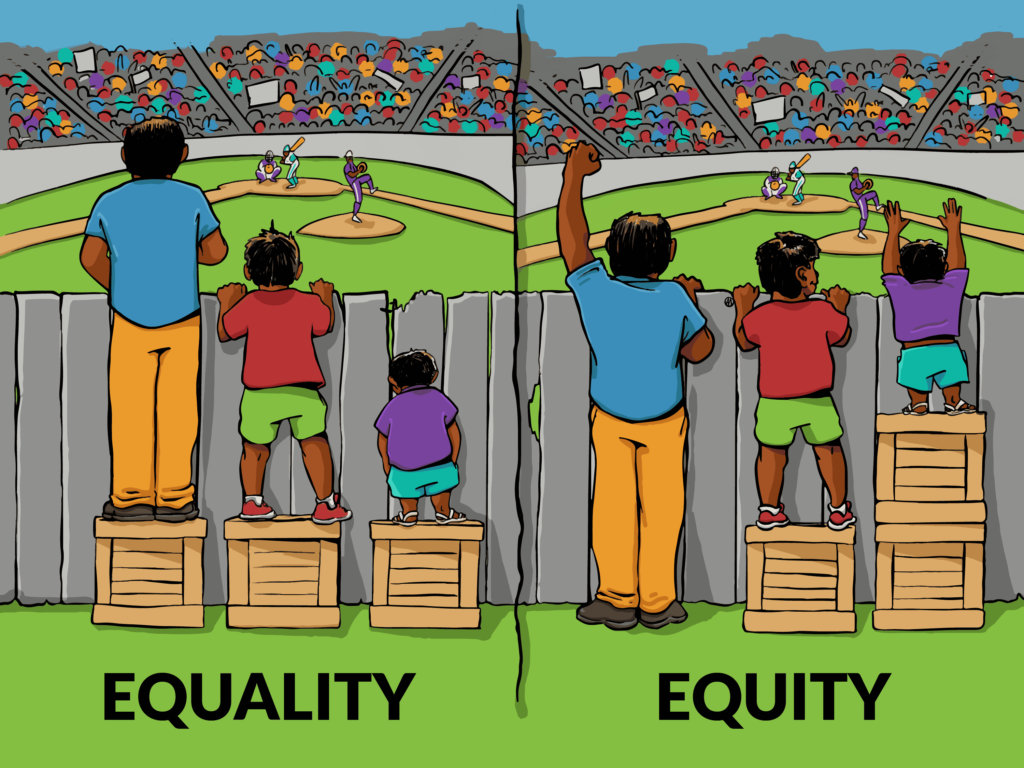
Fair does not always mean same. Fair means every child gets what they need to learn, belong and participate.
What support can the school provide?
At Risdon Park Primary School, we use a three-tiered approach to support student learning, wellbeing and participation.
The three tiers below explain the different levels of support available, helping ensure every student receives the right support at the right time.
Tier 1: Support for all students
This is the everyday support every child should receive. It includes safe classrooms, clear routines, quality teaching, positive relationships, explicit teaching of social and emotional skills, predictable behaviour expectations and a sense of belonging.
Examples include:
- visual routines
- clear instructions
- brain breaks
- calm classroom routines
- social and emotional learning
- anti-bullying teaching
- class adjustments
- regular communication with families
Tier 2: Extra support for some students
Some children need more support for a period of time. This may be small group support, targeted learning intervention, check-ins, social skills support, attendance support, regulation support or a short-term plan.
Examples include:
- small group literacy or numeracy intervention
- social skills group
- playground support
- check-in/check-out with a trusted adult
- targeted wellbeing support
- parent meeting and agreed strategies
- referral discussion with Student Support Services
Tier 3: Individualised support for a few students
Some children need a personalised plan because their needs have a significant impact on learning, safety, communication, behaviour, health, attendance or participation.
Examples include:
- One Plan
- Behaviour Support Plan
- Safety and Risk Management Plan
- Health Support Plan
- individual regulation plan
- Student Support Services involvement
- external provider collaboration
- case meetings with family, school and services
- referral to health, allied health or mental health supports
The Department for Education’s Student Support Services work with preschools and schools where children have educational support needs, including disability, learning difficulties, social, emotional or behavioural issues, health or wellbeing issues, disengagement, non-attendance or communication difficulties (Department for Education South Australia).
Who should I talk to?
Start with your child’s classroom teacher. They know your child’s learning, friendships and daily routines.
You can also ask to speak with:
- the Student Wellbeing Leader
- the Assistant Principal Inclusive Education and Wellbeing
- the Autism Inclusion Teacher
- the Principal
- Aboriginal Education staff, if culturally appropriate
- Student Support Services, through the school referral process
Student Wellbeing Leaders help promote and safeguard student wellbeing to optimise learning. They do not provide therapy, but they can support students and families with referrals and school-based supports (Department for Education South Australia).
If you believe your child is at immediate risk of harm, seek urgent help through emergency services or a health professional.
What Department for Education resources can help?
Useful Department for Education pages include:
- Disability support at school
- Student Support Services
- Student Wellbeing Leaders
- School Mental Health Service information
- Wellbeing for Learning and Life framework
- Behaviour support, suspension and exclusion information
- Translated behaviour support fact sheets
- Complaints and feedback information
The Department’s Wellbeing for Learning and Life framework supports educators and allied health professionals working with children and young people (Department for Education South Australia). The Department also lists approved wellbeing programs for South Australian government schools, including Life Ed and Healthy Harold, and Kids Helpline @ School for primary students (Department for Education South Australia).
What community and online resources can help?
Families may also find these services useful:
- GP or paediatrician
- Child and Family Health Service
- Child and Adolescent Mental Health Service, CAMHS
- Kids Helpline: 1800 55 1800
- Lifeline: 13 11 14
- Beyond Blue
- Headspace, for young people aged 12 to 25
- Raising Children Network
- Be You
- Parenting SA
- Multicultural Youth SA
The Department for Education lists several external support services for families, including CaFHS, CAMHS, Kids Helpline, Lifeline, Beyond Blue, Headspace, Women’s and Children’s Hospital and Multicultural Youth SA (Department for Education South Australia). Raising Children Network is an Australian Government-supported parenting resource with information on development, wellbeing, autism, ADHD and disability (Raising Children Network). Be You provides tools and resources to support mental health and wellbeing in early learning services and schools (beyou.edu.au).
Information in other languages
The Australian Government’s Disability Standards for Education resources for students with disability and caregivers are available in Easy Read, Auslan and other languages (Department of Education).
The Department for Education has translated information about raising a complaint into 18 languages (Department for Education South Australia). The Department also provides translated fact sheets about take-home, suspension, exclusion and expulsion in languages including Arabic, Burmese, Chinese, Dari, Filipino, Greek, Hindi, Italian, Nepali, Persian, Pitjantjatjara, Punjabi, Spanish, Swahili and Vietnamese (Department for Education South Australia).
Families can find these by searching the Department for Education website for:
- “disability support at school”
- “Student Support Services”
- “translated fact sheets suspension exclusion”
- “help to make a complaint”
- “Disability Standards for Education Easy Read Auslan languages”
What does the State Disability Inclusion Plan 2025–2029 mean for school children?
The State Disability Inclusion Plan 2025–2029 is a whole-of-government commitment to a more inclusive South Australia. It is not a separate individual school funding guarantee, but it sets expectations for government systems, including education. The plan says all people with disability have the right to inclusive education and meaningful employment, and that barriers must be addressed across education and employment (inclusive.sa.gov.au).
For school children, the plan commits South Australia to:
- a stronger education workforce with the knowledge and skills to support students with disability
- training for teachers and educators, including Disability Standards for Education training
- children with disability feeling valued, welcomed and able to access inclusive education from the early years
- tracking the proportion of government school students receiving adjustments to access education
- better transition support from school to further education, training or employment (inclusive.sa.gov.au)
The plan also names children with disability as a priority group and says children and young people with disability have the right to a full life, dignity, self-reliance and active participation in family, cultural and social life (inclusive.sa.gov.au).